

Predictable daily routines are organized, consistent sequences of activities that children can anticipate and follow each day, and they are especially valuable for autistic children who benefit from reduced uncertainty and clear expectations. This article explains what predictable routines are, why they matter for autism, and how Applied Behavior Analysis (ABA) strategies turn abstract schedules into reliable skill-building opportunities. Families will learn evidence-informed steps to design morning, mealtime, school, and bedtime routines that support communication, independence, and emotional regulation. The guide covers visual schedules, transition tools, task analyses, and reinforcement systems with practical examples and templates caregivers can adapt. It also outlines how ABA therapy integrates these approaches through assessment, individualized programming, and caregiver coaching. Read on for step-by-step implementation, visual schedule comparisons, caregiver training options, and the insurance and service-setting considerations families in the Miami area often ask about.
What Are Predictable Daily Routines and Why Are They Important for Autism?
Predictable daily routines are consistent, repeatable sequences of activities that provide structure and clear expectations; they work by reducing uncertainty and offering repeated practice opportunities that build competence. For autistic children, these routines create stable antecedents and predictable reinforcement contexts that lower anxiety and increase skill acquisition, making routines a foundation for behavior support. Current research and clinical practice highlight that routines function as environmental scaffolds—organizing time, cues, and prompts so children can focus on learning tasks rather than processing unpredictability. This section outlines core benefits and the behavioral mechanisms that explain why routines change outcomes for children with autism, and it leads into specific examples and strategies for families to adopt.
The Essential Role of Routines and Structure for Individuals with Autism
For individuals with autism, routines aren’t just helpful—they’re essential. They act as a roadmap through the day, providing a sense of control and stability in a world that can often feel chaotic and confusing. But why is this the case? Autism Routine and Structure: Essential Strategies for Daily Success
How Do Predictable Routines Benefit Children with Autism?
Predictable routines produce measurable benefits across emotional, behavioral, and skill domains by delivering repeated practice and consistent consequences that shape behavior. Routines reduce daily stressors by clarifying what happens next, which supports emotional regulation and reduces the frequency of problem behavior maintained by avoidance or escape. They also create repeated opportunities for targeted teaching—parents and therapists can embed communication targets, self-care steps, and independence goals into each routine using task analysis and reinforcement. Practical examples include a morning sequence that systematically teaches dressing and toothbrush routines or a mealtime routine that supports independent feeding and requesting. These benefits set the stage for intervention strategies like chaining and prompting, which are discussed next.
What Role Does Routine Play in Reducing Anxiety and Improving Behavior?
Routines reduce anxiety by increasing predictability and minimizing ambiguous cues that trigger stress; behaviorally, they change the antecedent environment so desired responses are more likely to occur. Predictability functions as antecedent control: clear schedules, timers, and priming reduce uncertainty and the need for continuous verbal instruction, which in turn lowers physiological arousal and reactive behaviors. Reinforcement contingencies embedded in routines strengthen adaptive responses—when independence is reinforced consistently, problem behavior decreases because the child learns the preferred way to achieve desired outcomes. Understanding these mechanisms enables caregivers to select tools such as visual schedules, countdown timers, and social stories to smooth transitions and maintain consistent expectations, which we explore in the sections on visual supports and transition strategies.
How Can ABA Therapy Support the Development of Structured Routines for Autistic Children?
ABA therapy offers a systematic framework—assessment, task analysis, prompting, reinforcement, and data-driven adjustment—that directly supports routine development by breaking complex activities into teachable steps. Clinicians use individualized assessment to identify current skills and barriers, then apply chaining and prompting strategies to teach sequence-based tasks within natural routines. ABA’s emphasis on measurable goals and progress monitoring ensures routines evolve with the child’s skills; data collection clarifies which steps need more support and which prompts should be faded. The following table compares common ABA components and how each contributes to routine building, followed by a concise summary of how individualized programming enhances routine outcomes.
Different ABA components contribute specific, teachable contributions to routine development and maintenance.
| ABA Component | Primary Function | Role in Routine Building |
|---|---|---|
| Task analysis | Breaks complex tasks into discrete steps | Makes multi-step routines teachable and measurable |
| Chaining | Links steps into a fluent sequence | Teaches independence by reinforcing step completion |
| Prompting & fading | Supports performance then reduces assistance | Encourages transfer of control to natural cues |
| Reinforcement systems | Delivers contingent consequences | Increases frequency of desired routine behaviors |
| Data collection | Tracks progress and guides decisions | Identifies steps needing modification or support |
This comparison clarifies how each ABA element targets a different barrier to routine mastery, allowing teams to design focused interventions that build reliable daily schedules.
What Are the Key Components of ABA Therapy for Routine Building?
Key ABA components for routine building include structured assessment, task analysis, chaining strategies, systematic prompting and fading, reinforcement systems, and continuous data collection to monitor progress. Assessment identifies baseline skills and environmental triggers; task analysis decomposes routines into teachable actions that can be targeted one step at a time. Chaining procedures (forward or backward) teach the sequence, while prompting hierarchies provide temporary supports that are faded as independence emerges. Reinforcement strategies—both natural and programmed—maintain behavior, and data collection ensures interventions are adjusted based on observed learning. Together these components create a replicable process that families and practitioners can use across morning, mealtime, school, and bedtime routines, leading into individualized programming considerations.
How Does Individualized ABA Programming Enhance Routine Effectiveness?
Individualization means tailoring routines to a child’s developmental level, communication profile, sensory preferences, and family context so that goals are realistic and motivating. A customized plan selects appropriate visual supports, establishes reinforcement that matches the child’s preferences, and sequences tasks to match attention and motor skills. Collaboration with caregivers and schools ensures consistent implementation and generalization; measurable goals and frequent progress reviews allow teams to adjust task complexity and prompting levels. For example, a child who benefits from backward chaining may learn toothbrush steps within the bathroom routine faster when the final, most reinforcing step is taught first. Individualized programming secures functional outcomes by aligning teaching methods with the child’s unique learning profile.
How Do Visual Schedules Help Create and Maintain Autism Daily Schedules?
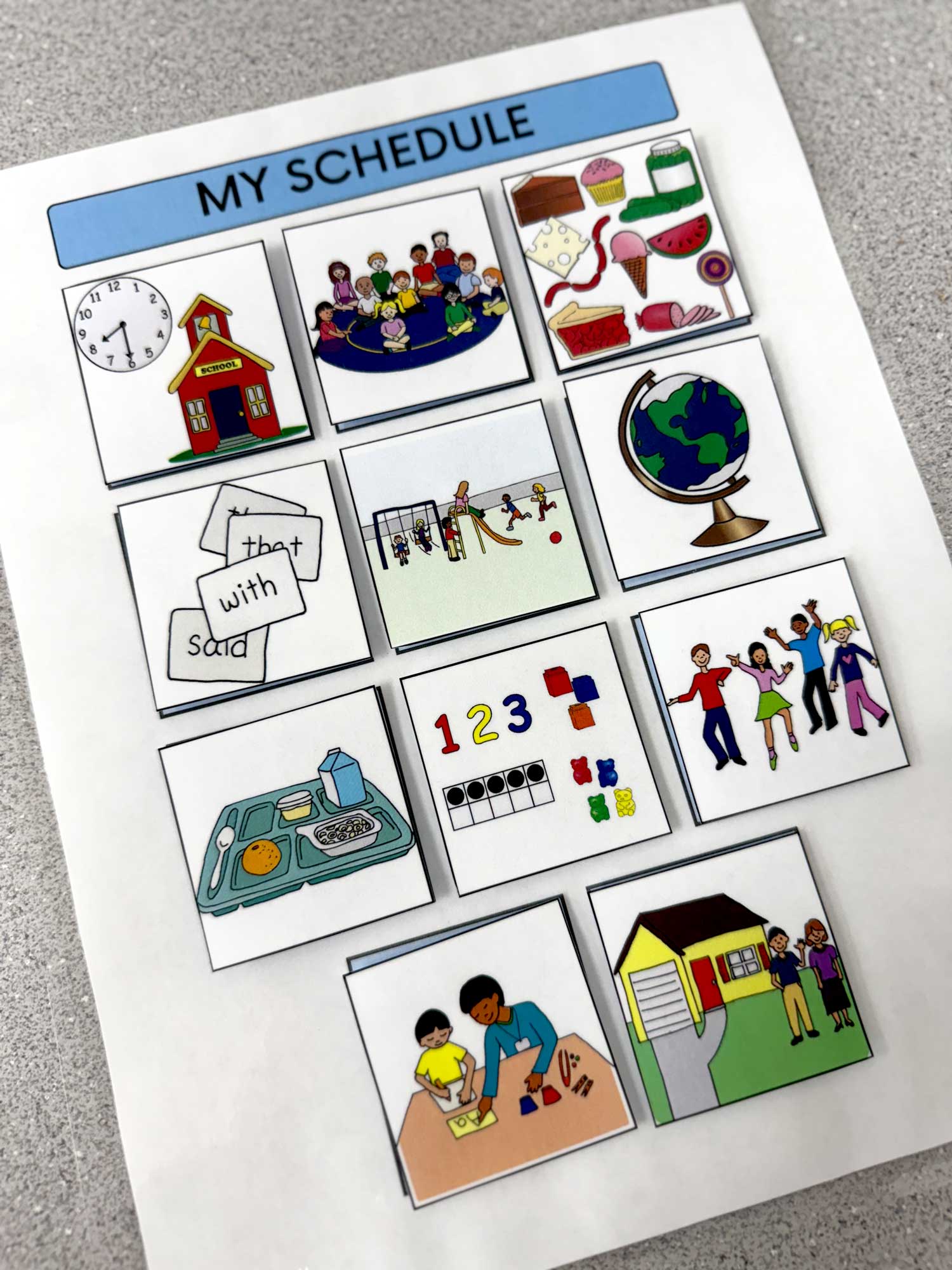
Visual schedules are graphic representations—picture cards, written lists, timers, or apps—that externalize expectations and sequence events so children can anticipate and navigate their day with reduced verbal prompting. They work by shifting cognitive load from memory and language processing to perceptual cues, allowing children to process routines at their own pace and consult the schedule when uncertain. Visual supports decrease reliance on adult direction, scaffold transitions, and provide a consistent reference that can be used across settings to promote generalization. The table below compares types of visual schedules by age/skill level and best use-case, and the following subsections explain which formats suit different learners and how families can implement them in home and school contexts.
Visual schedules vary in format and best-practice applications based on age, reading ability, and portability needs.
| Schedule Type | Best For | Portability / Complexity |
|---|---|---|
| Picture cards | Non-readers, young children | High portability; low complexity |
| First–then boards | Beginners needing clear sequence | Portable; very simple |
| Written lists | Older children who read | Medium portability; higher complexity |
| Timer-based visual timers | Children who benefit from countdowns | Portable; supports time awareness |
| App-based schedules | Families wanting flexible reminders | High portability; variable complexity |
This comparison helps caregivers choose a schedule type that matches the child’s skills and daily contexts, enabling smoother implementation and effective fading over time.
Visual Activity Schedules (VAS) as Evidence-Based Practice for Autism
Results suggest that VAS can be considered an EBP for individuals with ASD, especially when used in combination with systematic instructional procedures. VAS can be used to increase, maintain, and generalize a range of skills of individuals from preschool through adulthood in a variety of settings (e.g., general education, community). Evaluating visual activity schedules as evidence-based practice for individuals with autism spectrum disorders, V Knight, 2015
What Types of Visual Schedules Are Most Effective for Children with Autism?
Picture-based schedules (photo or symbol cards) work well for non-readers because they use concrete imagery to represent activities and reduce verbal demands. First–then boards provide a minimal, powerful structure for beginners by showing the immediate contingency—first a task, then a preferred activity—which supports motivation and compliance. For older children, written schedules or checklists promote independent planning and self-monitoring, while digital apps and visual timers offer portability and dynamic sequencing for families on the go. Selecting the right format depends on the child’s communication skills, attention span, and the contexts where the schedule will be used, and will guide decisions about when to fade external cues as independence grows.
Understanding Visual Schedules for Children with Autism
A visual schedule is a type of visual support used to help children anticipate transitions and upcoming activities (Vaughn et al.2005) and to understand the expected agenda for a given period (e.g., daily schedule, class period schedule). Visual schedules typically consist of pictures, or a combination of pictures and words, that represent the expected activities in the order in which they are to be completed. Visual Schedule, 2021
How Can Families and Caregivers Use Visual Schedules at Home and School?
Families can implement visual schedules by first selecting a format that matches the child’s abilities, then teaching the child to consult the schedule and use it to transition between activities with minimal adult prompting. Introduce the schedule through modeling and practice: guide the child to follow the sequence, reinforce correct consultation and completion, and use timers or countdowns to prepare for upcoming changes. Consistency across home and school settings—using similar icons or sequencing—facilitates generalization and reduces confusion during transitions. Over time, gradually increase expectations for the child to check and update the schedule independently, fading prompts while maintaining reinforcement for independent completion.
What Are Practical Steps to Create and Implement Predictable Routines at Home?
Creating effective routines at home follows a stepwise process: assess current abilities and family needs, design a schedule with visual supports and task analyses, implement with prompting and reinforcement, and monitor progress with data so adjustments are evidence-based. Each step emphasizes concrete actions: observing where breakdowns occur, choosing appropriate visual tools, breaking tasks into teachable components, and selecting reinforcers that promote independence. This section presents a concise, actionable sequence families can follow and includes quick troubleshooting tips for common barriers like resistance to transitions and variable motivation. The numbered steps below function as a practical featured-snippet-style plan families can use immediately.
Practical, step-by-step guidance families can implement today:
- Assess current routines and identify one target routine to teach, noting strengths and barriers.
- Break the target routine into small steps (task analysis) and select visual supports.
- Teach steps using prompting and chaining, deliver consistent reinforcement for correct steps.
- Collect simple progress data and adjust prompts, reinforcers, or step difficulty as needed.
- Generalize by practicing across settings and gradually fading supports toward independence.
Following this sequence helps families move from planning to measurable progress and prepares them to handle transitions and behavior during changes, which the next subsection explains.
How to Design a Daily Schedule That Supports Communication and Independence?
Design a daily schedule to promote communication and independence by embedding opportunities for choice, functional communication targets, and graduated task complexity that matches the child’s skills. Include communication supports such as choice boards, PECS-style pictures, or simple verbal prompts within each step to encourage requests and comments; pair each step with a clear reinforcement contingency to reward independence. Break multi-step activities like dressing or oral hygiene into 3–6 discrete actions, teach them using chaining, and incorporate natural reinforcers (e.g., access to preferred activities) contingent on independent completion. Regularly review collected data to identify steps that need simplification or additional prompting, ensuring the schedule remains both challenging and achievable.
What Are Tips for Managing Transitions and Behavior During Routine Changes?
Managing transitions and behavior during routine changes requires anticipatory strategies—priming, countdowns, visual timers, and simple social stories—that reduce surprise and provide predictable cues for upcoming shifts. Use priming by previewing changes shortly before they occur, employ countdowns (visual or verbal) to prepare the child, and offer choices where feasible to increase a sense of control. When problem behavior emerges, implement a brief contingency plan that includes de-escalation steps, brief reinforcement for alternative behaviors, and consistent follow-through; collect data to understand triggers and revise the routine as needed. These tools help families navigate temporary disruptions and support maintenance of routines even during changes.
How Can Parents and Caregivers Receive Support and Training for Routine Building?
Caregiver training is essential for routine fidelity and generalization; structured coaching, in-session modeling, and IEP collaboration build caregiver skills so routines are implemented consistently across home, school, and community. Training focuses on teaching parents how to conduct task analyses, deliver prompts and reinforcement, use visual supports effectively, and collect simple progress data. Families benefit when clinicians demonstrate strategies in real contexts, then coach caregivers to replicate them while providing feedback and problem-solving. The table below outlines common caregiver supports and their typical benefits, followed by information about service access options and how families can expect training to integrate with broader ABA programming.
| Caregiver Support | Typical Benefit | How It Integrates with Routines |
|---|---|---|
| In-session modeling | Caregivers observe procedure | Demonstrates technique in real time |
| Parent coaching | Builds implementation fidelity | Guides caregiver practice with feedback |
| Workshop training | Introduces core concepts | Provides group learning and shared strategies |
| IEP assistance | Aligns school goals with routines | Ensures consistency across settings |
This table shows that combining demonstration, coaching, and system-level coordination produces stronger routine implementation than ad hoc guidance alone, which leads naturally to the specific offerings families can access.
What Resources Does Mestre Behavior Offer for Caregiver Training?
Mestre Behavior provides individualized ABA therapy services that include caregiver training, parent coaching, and coordination with school teams for IEP support, making it practical for families seeking hands-on help with routine development. Their programs emphasize translating clinic strategies into the home and school environment through coaching and collaboration so caregivers can implement task analyses, visual schedules, and reinforcement plans with fidelity. Services are delivered across flexible settings—clinic, in-home, and school-based—which facilitates direct modeling and real-world practice of routines in the contexts where they matter most. Families looking to integrate structured routine supports into daily life can connect with Mestre Behavior to discuss caregiver training options and how those services fit into a broader ABA plan.
How Does Parent Training Improve Routine Consistency and Child Outcomes?
Parent training improves consistency by increasing caregiver fidelity to intervention steps, ensuring that prompts, reinforcement, and fading occur reliably across contexts and caregivers. When parents learn to implement task analyses, use visual supports, and record simple progress data, routine strategies are more likely to generalize beyond clinic sessions and produce durable gains in independence and communication. Evidence-based coaching that includes modeling, guided practice, and feedback accelerates caregiver skill acquisition and reduces reliance on therapists for everyday routine management. Improved caregiver implementation directly correlates with better child outcomes because consistent reinforcement and predictable cueing are the mechanisms that make routines effective.
Which Insurance Options and Service Settings Facilitate Access to ABA Therapy for Routine Development?
Access to ABA therapy for routine development is often facilitated by service setting flexibility and broad insurance acceptance; knowing typical service settings and insurance considerations helps families choose options that embed routines into daily life. Different settings offer distinct advantages: in-home services allow practice in natural contexts, clinic-based services support intensive skill acquisition, and school-based services promote alignment with IEP goals. Many providers accept a wide range of insurance plans, but families should verify coverage and preauthorization requirements with their insurer and provider. The table below clarifies service-setting benefits and typical insurance considerations to guide decision-making for routine-focused interventions.
| Caregiver Support | Typical Benefit | How It Integrates with Routines |
|---|---|---|
| In-session modeling | Caregivers observe procedure | Demonstrates technique in real time |
| Parent coaching | Builds implementation fidelity | Guides caregiver practice with feedback |
| Workshop training | Introduces core concepts | Provides group learning and shared strategies |
| IEP assistance | Aligns school goals with routines | Ensures consistency across settings |
This table helps families weigh trade-offs between naturalistic practice and intensive skill acquisition, and it sets up practical next steps for verifying coverage and setting expectations for service delivery.
What Insurance Plans Does Mestre Behavior Accept for ABA Therapy?
Mestre Behavior accepts most major insurance plans and advises families to verify coverage and preauthorization requirements directly with their insurer and the provider to confirm benefits for specific services. Because plan policies vary, families should request a benefits check, ask about in-network status, and clarify any prior authorization procedures or visit limits that could affect routine-focused services. Mestre Behavior’s service descriptions note flexible settings and caregiver training as part of their program offerings, and families are encouraged to discuss coverage details and service options with the provider to align needs with benefits. Verifying insurance early helps prevent delays and ensures chosen services can be scheduled without unexpected financial barriers.
How Do In-Home, Clinic, and School-Based Services Support Routine Implementation?
In-home services allow therapists to teach routines where they naturally occur—practicing morning, mealtime, and bedtime sequences in the child’s environment increases generalization and caregiver involvement. Clinic-based services offer a controlled setting for intensive teaching of particular skills using specialized materials and structured sessions, which can accelerate mastery before moving practice into the home. School-based services embed routine strategies within the educational day and align interventions with IEP goals, promoting consistency between therapy and classroom expectations. Selecting a combination of settings—such as initial clinic teaching followed by in-home generalization and school coordination—often yields the strongest outcomes for routine adoption and long-term independence.
- Key insights: Combining settings and confirming insurance coverage increases access and continuity of care.
- Practical next step: Families should request a benefits verification and discuss service-setting options with providers to plan routine-focused ABA services.
Predictable routines work best when they’re built around your child’s unique strengths, communication needs, and what motivates them, and when caregivers feel confident using the same strategies consistently across home, school, and the community. With ABA-informed tools like task analysis, visual schedules, transition supports, and reinforcement, families can turn everyday moments—mornings, meals, homework, and bedtime—into structured opportunities for growth in independence and emotional regulation. If you’re ready for hands-on support building routines that actually fit real life, Mestre Behavior can help you assess what’s getting in the way, design an individualized plan, and coach you step-by-step so routines become more predictable, calmer, and easier to maintain over time.
Contact us today for a complimentary consultation.
About the Author: Ashley Mestre, M.S., BCBA